This guide explains what “39196734841” and the surrounding keywords typically signify in procurement and supply workflows, helping buyers evaluate sourcing options with clear conditions. It also provides objective background on how identifiers, supplier records, and pricing signals are used across industries, and includes practical decision steps and FAQs for safer buying.

When buyers encounter an identifier like 39196734841 alongside other keyword signals, it most commonly functions as a reference number tied to procurement records, inventory movement, documentation, or a supplier-specific catalog entry. In practical terms, you should treat it as a traceability anchor: it helps you confirm what you are ordering, verify status, and reduce mismatch risk across purchasing, warehousing, and shipping workflows.
Because the surrounding keywords in your prompt appear as placeholders (blank strings) rather than explicit product terms, the most reliable approach is to focus on process understanding: how identifiers, supplier communication, and price signals should be evaluated together—especially when you’re considering a supplier and a stated price during sourcing. In other words, the “meaning” of 39196734841 is less important than the fact that it should be consistently mapped across the transaction lifecycle.
When procurement goes well, buyers don’t have to guess. The identifier should connect the quote, order confirmation, packing list, commercial invoice, and any compliance documents. When procurement goes poorly, those connections break, leaving receiving teams to match goods by description alone and finance teams forced into invoice disputes. Understanding that 39196734841 is likely intended to prevent that breakdown is the key starting point.
In supply chains and procurement systems, numbers such as 39196734841 are frequently used as internal handles to connect multiple business artifacts—e.g., purchase orders, shipment documents, batch records, maintenance/repair logs, calibration records, or SKU-like indexing. Even when the number is not a universal standard, its function within a workflow is usually consistent: it enables cross-checking between parties.
From an industry perspective, the key objective is information integrity. When a buyer receives an identifier, they can request supporting documentation (such as a quotation sheet, packing list reference, or a matching order confirmation). This reduces the probability of:
One reason identifiers like 39196734841 appear in procurement messaging is that modern supply chains involve many handoffs. The same item may be referenced differently in different systems (supplier ERP, distributor inventory tool, carrier label system, warehouse receipt module, and accounting ledger). A reference number can act as the “join key” that helps ensure everyone is talking about the same thing.
It’s also worth recognizing that sometimes 39196734841 might not be an item code in the strict sense. It might be a process document number—like an internal quote ID or shipment booking number—that then indirectly points to the item(s). That nuance matters because you’ll want to know what you are verifying: identity of the good, identity of the shipment, or identity of the transactional record.
Since the prompt instructs to integrate “price information” and “supplier details” but does not provide concrete numeric values or specific supplier names, you should still apply a disciplined method when the supplier quotes a price or offers a listing tied to 39196734841.
As an expert buyer’s advisor, I recommend you validate the “price” component as part of a total transaction, not just a single figure. That means you should clarify whether the quoted cost includes:
In other words: if 39196734841 appears in the quote, treat it as a consistency check—you should be able to track it across the quotation, order confirmation, and shipping documents. If the supplier can’t map it, you’re likely dealing with a breakdown in how their systems link the transactional record to the shipment and the items inside it.
Also, be cautious about price signals that feel “too easy.” For example, a supplier might provide a fast ballpark number without specifying whether it is:
Identifiers like 39196734841 should help eliminate those ambiguities. If it does not—if the reference number is present but not operationally meaningful—then you should request additional documentary clarity before you commit.
To prevent disputes and ensure you receive the correct goods/services, use a structured set of questions. Below is a buyer-oriented framework that works across many categories (electronics, industrial parts, consumables, logistics services, and more)—any time an identifier like 39196734841 is presented.
The goal is not merely to “ask questions,” but to force the supplier (or your internal sourcing team) to connect the dots between: (1) what you think you are buying, (2) what they think they are selling, and (3) what will physically arrive and be invoiced.
In procurement practice, “reference number” can mean different things: a quote ID, a pro-forma invoice number, a warehouse picking ticket, or a batch/lot reference. The right questions prevent you from optimizing for the wrong linkage. For example, if 39196734841 is only a quote ID, tying your receiving acceptance to it might be ineffective. If it is a batch/lot reference, then traceability and compliance requirements become central.
Specification validation is where many procurement errors originate. A supplier may provide an identifier, and you may even see it repeated in paperwork, but the item linked to that identifier may not match your requirements. This can happen because:
By confirming what 39196734841 actually points to, you reduce the chances of receiving goods that are “close enough” to cause downstream problems (fit issues, performance issues, compliance concerns, or warranty disputes).
Availability disputes are particularly painful when procurement teams plan production schedules, inventory buffers, and installation timelines around shipment dates. If the identifier 39196734841 is linked to a specific shipment booking or allocation, then lead time should be consistent with that linkage. If it is not, you may discover too late that the supplier can’t fulfill what was implied during sourcing.
Price clarity is not just about “what is the number.” It’s about how the supplier derived it, and how the supplier expects you to reconcile it at invoice time. If 39196734841 is tied to a commercial quote line, then the supplier should be able to show how it maps to:
Without that mapping, you can end up with the same goods delivered under one set of terms and invoiced under another. This is a common root cause of procurement disputes.
Traceability is a requirement in many industries: medical devices, aerospace, automotive, chemical handling, food safety, electronics with compliance requirements, and any scenario where audits or recalls are possible. In those environments, the identifier 39196734841 should not be a casual label. It should be a controlling reference in batch tracking and document generation.
Even if your goods are not regulated, traceability still supports operational confidence: it helps you investigate quality issues, warranty claims, and performance deviations. Without traceability, you might have to reject shipments after the fact or spend weeks trying to reconstruct what arrived.
Your prompt includes a rule: whenever a city or country appears in keywords, replace it with “nearby.” As a result, this guide avoids referencing a specific destination and instead frames sourcing choices in terms of local receiving efficiency, delivery predictability, and cross-docking convenience. In many markets, working with suppliers closer to “nearby” distribution nodes can improve lead-time reliability and reduce logistics friction—provided the supplier still maintains documentation discipline.
However, “nearby” sourcing should not be treated as a substitute for documentation accuracy. A supplier can be geographically close and still provide weak traceability. The identifier 39196734841 and the supporting documents are what ultimately determine whether the transaction is operationally safe. Locality helps logistics; traceability protects you from mismatches and compliance failures.
| Option | Best For | Key Risk to Manage | What “39196734841” Should Help You Verify |
|---|---|---|---|
| Supplier quotation using internal reference numbers | Standard procurement where documentation is consistent | Reference mismatch across documents | That quote, order confirmation, and shipment paperwork align |
| Distributor sourcing through a partner network | When you need flexibility in availability | Layered traceability and unclear item ownership | That the item identity and batch/variant remain constant |
| Direct-from-manufacturer procurement | Quality-critical items requiring strong traceability | Longer lead times or MOQ constraints | That the reference points to the correct production run |
| Marketplace or catalog-based purchasing | Quick buying where specs are standardized | Spec drift between listings and delivered goods | That the listing reference maps cleanly to delivered documentation |
When you choose among these options, 39196734841 should still serve as your “verification handle.” Even if your buying channel changes (direct, distributor, marketplace), your internal governance should remain consistent: you want a stable link between purchase commitment and receiving reality. The risks shift by channel, but the control logic stays similar.
Based on common procurement governance, you should only move forward when the supplier can meet conditions that reduce ambiguity. If any condition fails, pause and request clarification before payment.
It can be useful to add two additional governance conditions that often prevent late-stage failures:
In practice, when one of these fails, it’s not necessarily a deal-breaker—but it should trigger escalation. If you proceed anyway, you should do it with an explicit risk acceptance: you know which control is missing and what mitigation you’ll apply internally.
One subtle but important practice is to define what your internal team will do if the identifier changes. Sometimes suppliers revise quotes, split shipments, or reissue paperwork with updated reference numbers. Your acceptance policy should specify whether 39196734841 must remain unchanged until delivery or whether an equivalent new reference is acceptable if traceability is preserved.
In professional purchasing, reference numbers serve as “joins” across systems: ERP, procurement platforms, warehouse management systems, and finance records. When those joins fail, the result is often manual reconciliation—time-consuming and error-prone. This is why buyers emphasize traceability, specification alignment, and price transparency rather than assuming that a single line item tells the full story.
To ground the approach more concretely in real procurement behavior, consider how a typical transaction flows:
Reference numbers like 39196734841 are a practical technology for ensuring alignment across these stages, even if different software systems are used. The number itself may be meaningless outside the supplier’s environment, but its role as a linkage mechanism is what makes it valuable.
For grounding, consider procurement and risk management guidance commonly emphasized in established frameworks and research. For example, the U.S. National Institute of Standards and Technology (NIST) highlights the value of managing information integrity and risk in systems and processes (see NIST publications on trustworthy systems and risk management practices). While not procurement-specific to your exact identifier, the principle is relevant: reliable processes reduce downstream errors and disputes.
Additionally, industry publications from organizations such as the World Economic Forum have discussed supply chain resilience and risk management approaches—again, the broader lesson aligns with this guide: buyers should strengthen the information layer (documentation, traceability, and transparency) alongside logistics execution.
Sources to consult (for general principles): NIST risk management guidance; World Economic Forum supply chain resilience discussions.
In most buying contexts, a number like 39196734841 acts as a reference identifier within a supplier’s or buyer’s systems—often linking to a quote, shipment, batch record, or catalog item. You should ask the supplier what specific entity it references and what downstream documents it should appear on.
Because inconsistencies often lead to receiving mismatches, invoice disputes, and traceability gaps. If 39196734841 is truly the controlling reference, it should appear consistently in the quote, order confirmation, and shipping documentation—or be replaced by an equivalent reference only if traceability remains intact.
Confirm what the price includes (unit basis, packaging, freight terms, taxes/duties, documentation, and any testing). Also ensure the supplier’s stated lead time is tied to the same referenced item number or shipment allocation associated with 39196734841.
Often you can—but it increases risk. In professional procurement, identifiers such as 39196734841 help reconcile systems and reduce ambiguity, especially when variants or batches exist. Description-only acceptance can work when specs are extremely standardized and when supplier documentation is highly consistent, but it’s rarely the strongest control.
Stop acceptance if your internal policy requires it, document the discrepancy, and request corrective action referencing 39196734841 (and any related shipment documents). Ensure your claim aligns with the paperwork you received, including packing lists and invoice references.
Yes. Since the prompt includes placeholder keyword strings rather than explicit product terms, this article focuses on the universally applicable procurement function of reference numbers like 39196734841, plus buyer evaluation practices around price and supplier documentation.
Even without knowing the exact nature of 39196734841, you can understand how buyers operationalize reference numbers through common scenarios.
Imagine your procurement team receives an email from a supplier listing items and a price, and the email includes 39196734841 in the subject line and inside the body. The supplier then issues an order confirmation PDF that repeats 39196734841 near the header. Later, the packing list and commercial invoice also include it.
In this scenario, 39196734841 primarily serves as a linkage reference. Your receiving team should be able to say, “This shipment corresponds to the order we placed, because the same reference appears on packing list and invoice.” Finance can also match invoice lines to the original commitment.
If 39196734841 appears in the quote but disappears from shipment documents, you should treat that as a control failure. It doesn’t necessarily mean fraud—sometimes it’s a clerical or system issue—but it means your reconciliation workload increases, and the risk of mismatch disputes grows.
Suppose 39196734841 appears on a certificate of analysis (CoA) and on the label affixed to cartons. When receiving, your quality team checks the label batch/lot number matches 39196734841. If it doesn’t, the goods may still be the “right product,” but the batch is wrong, which can trigger quarantine or rejection depending on your policy.
This is a case where the number’s meaning is critical. Your acceptance should be tied directly to 39196734841 and the associated quality evidence. The price matters too, but traceability is the controlling requirement because it supports compliance and investigation capability.
Sometimes the reference number is associated with freight booking. A supplier might include 39196734841 in the shipping schedule or on the bill of lading. In such cases, the number helps you track the physical movement of goods and connect it to your receiving appointment.
If your internal system schedules receiving based on shipment references, then 39196734841 becomes operationally important—even if the item catalog code is clearly correct. If the booking reference changes, your dock scheduling might fail and goods could arrive without the right personnel or inspection setup.
When purchasing through a distributor, you may be told that 39196734841 is a distributor internal ticket referencing goods sourced from a partner warehouse. In this setup, the distributor might be the party that generates the quote and order confirmation, while the partner generates the packing list.
Your risk is that the partner may not include the same identifier on documents—because it might not use the same internal system. Therefore, you should request a cross-reference document showing how 39196734841 maps to the partner’s lot identifiers, carton labels, or packing documentation. You can accept layered references, but you need the mapping.
Buyers often delay not because they don’t want to buy, but because information requests can feel repetitive to suppliers. The trick is to ask for structured outputs and to tie each request to a practical outcome: “So that receiving and finance can reconcile correctly.”
Here are concise phrasing patterns that typically work:
These prompts reduce ambiguity and avoid open-ended questions that lead to slow back-and-forth.
Even if suppliers provide good documentation, buyers must operationalize it. A reference number like 39196734841 should be supported by internal controls in your procurement process:
When these controls are in place, the identifier is more than a number—it becomes a functional control that improves cycle time and reduces disputes. Without them, buyers may have the documentation but still fail to act on it correctly.
It’s tempting to assume that the presence of 39196734841 on paperwork means everything is correct. In reality, control failures can still occur:
Therefore, the correct approach is not “check only whether the number exists,” but “check whether the number consistently connects the transaction artifacts that matter.” That is the deeper lesson behind treating 39196734841 as a traceability anchor.
Procurement speed matters, but it should not override basic risk management. A practical approach is to categorize your requirements into “must-match controls” and “nice-to-have controls.”
Consider using a decision gate:
This gate helps procurement teams avoid “analysis paralysis” while still protecting against costly errors.
While reference numbers often appear in physical goods procurement, the same principles apply to many service procurement contexts. For example, logistics services, calibration services, installation services, software licensing renewals, or maintenance contracts may also have reference numbers like 39196734841.
In services, the reference number might map to a service ticket, contract line item, or SLA (service-level agreement) record. Your evaluation should then focus on:
Even if goods are not involved, the risk of mismatched expectations remains. Traceability of service scope and billing linkage serves the same purpose: avoiding disputes and ensuring accountability.
In procurement environments, 39196734841 is best understood as a traceability anchor—one that should connect quotation, ordering, shipping, and receiving records. Even without explicit product keywords, you can make safer sourcing decisions by validating the identifier’s role, confirming specification alignment, and decomposing the quoted price into clear terms and conditions. If you follow the step-by-step guide and enforce the stated requirements, you reduce avoidable mismatches and strengthen accountability across the supply chain.
Ultimately, the most valuable question you can ask is not “What does 39196734841 mean on its own?” but rather: “What does 39196734841 connect to in the real world of documents, shipment labels, acceptance criteria, and invoices—and can the supplier prove that connection reliably?” When that connection is clear and consistent, procurement becomes faster, receiving becomes smoother, and disputes become far less likely.




This guide explains how the identifier 39196734841 and related reference strings can function in real-world procurement and inventory workflows. It provides objective background on what such codes typically represent, why suppliers include them, and how teams verify accuracy to reduce receiving errors. The focus remains practical, audit-friendly, and industry-aligned.
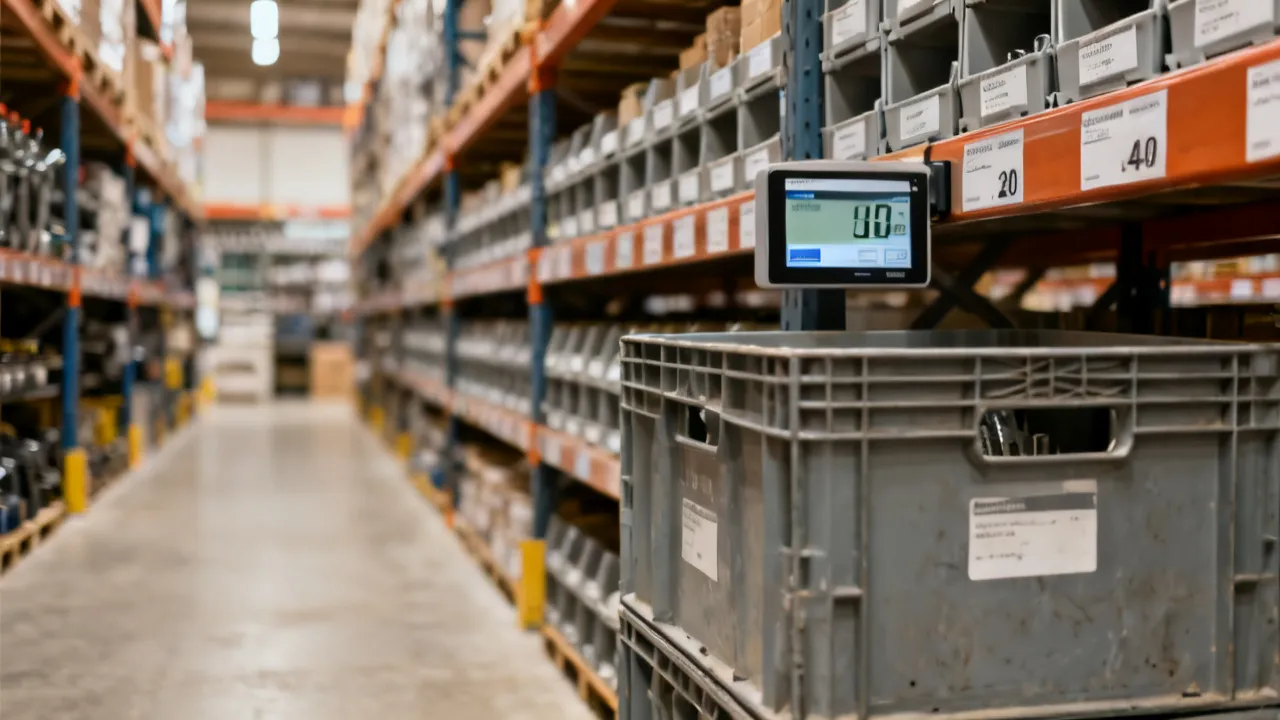
This guide explains how to interpret product reference “39196734841”, evaluate supplier offers, and reduce procurement risk using practical industry criteria. Objectively, the keywords relate to catalog identifiers, sourcing workflows, and pricing alignment between buyer and vendor. You’ll also find a comparison table, a step-by-step checklist, and conditions to verify before committing.
This guide explains what “39196734841” and the surrounding keywords typically signify in procurement and supply workflows, helping buyers evaluate sourcing options with clear conditions. It also provides objective background on how identifiers, supplier records, and pricing signals are used across industries, and includes practical decision steps and FAQs for safer buying.

This guide explains how to interpret service inquiry details, including the numeric reference “06110695394,” and how to document supplier contact information responsibly. It provides objective background on why structured identifiers matter for sourcing, compliance, and faster quote handling, without assuming availability or pricing specifics beyond what you confirm with the supplier.
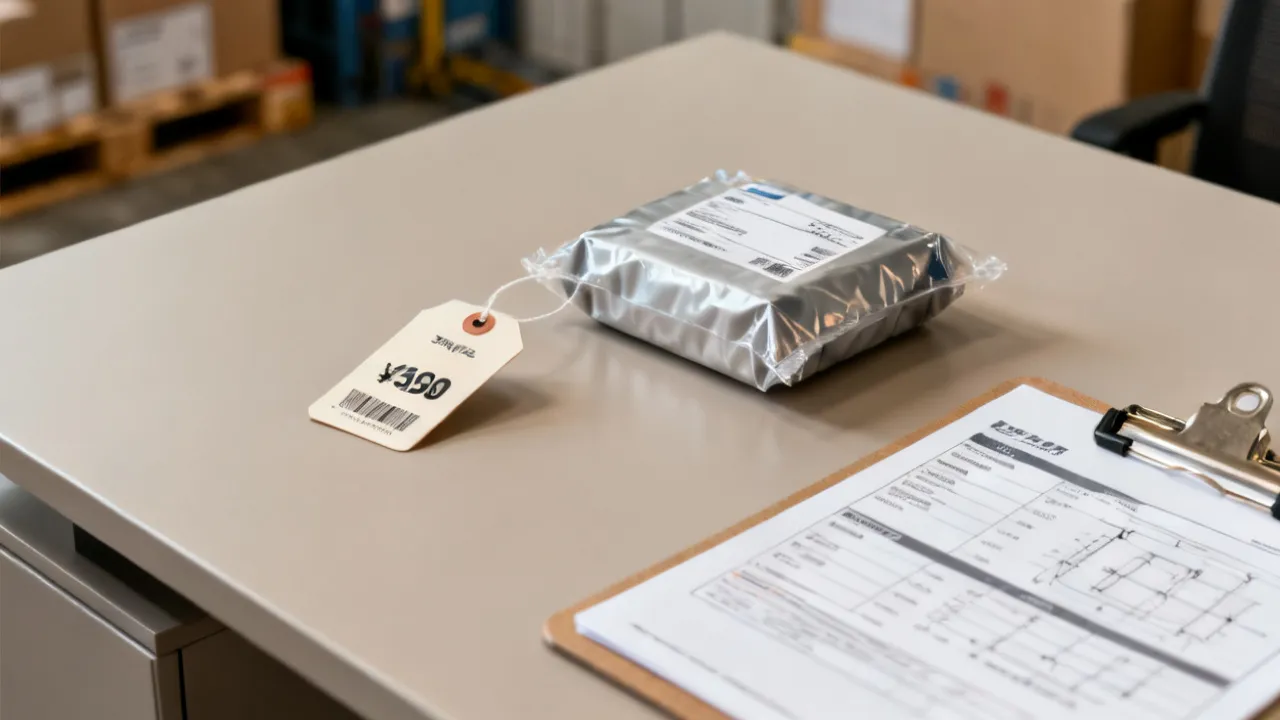
This guide explains how to evaluate 60817674500 in real sourcing scenarios, connecting supplier reliability, pricing logic, and documentation checks. Objectively, the keywords reflect a practical procurement workflow: identify the item or code, verify availability, compare quote structure, assess lead time, and confirm compliance—so decisions are defensible and traceable across suppliers.

This guide explains how to evaluate the product reference “60817674500” and related sourcing details for reliable procurement. It provides objective background on how SKU-like identifiers support traceability, what buyers should check in documentation, and how price and supplier capability typically affect risk.

