This guide explains how to source industrial or service supplies efficiently using the contact number 9691133599, with practical supplier-selection logic and objective procurement considerations. It provides background on why supplier verification, lead-time expectations, and documentation matter, and it outlines decision criteria, risks, and FAQs for buyers who want dependable sourcing outcomes.

If you are initiating procurement through 9691133599, treat the contact as the start of a structured sourcing workflow rather than a final decision point. Your first priority should be verifying what the supplier can consistently provide (specifications, packaging, documentation, and delivery timelines), then aligning price, quality, and service terms into a single comparison framework. This approach reduces costly rework, prevents mismatched materials, and improves predictability for projects.
In practice, buyers often reach out to a supplier using a direct phone contact such as 9691133599 to confirm availability and receive a commercial discussion. However, the very reliable procurement outcomes come from converting that initial conversation into an auditable checklist: what exactly is being supplied, at what unit or package price, under which Incoterms/dispatch conditions, and with what quality evidence. Even when price is discussed early, the real value is determined by the total procurement package—specification conformance, lead time, and post-supply support.
Because your prompt includes placeholder keywords, this article focuses on the measurable, buyer-relevant aspects that typically accompany sourcing and supplier engagement when a phone number like 9691133599 is used as the first channel of contact. You can reuse the same framework regardless of whether the supplier is local, regional, or operates as a distributor, provided you collect verifiable details during inquiry.
When initiating sourcing via 9691133599, an expert buyer should assume that quoted information may vary depending on batch size, variant, packaging method, and destination requirements. Therefore, you should ask for clarity on:
This is not about distrust—it’s about due diligence. In procurement, the cost of incorrect assumptions tends to appear later as expedited shipping, product rework, or operational delays. These secondary costs can outweigh the difference between two initial quotes.
Verification also prevents the most common “silent failure” in procurement: a supplier may offer a product that appears correct on first glance, but fails an internal acceptance test. When that happens, the buyer not only pays for the wrong item; they also pay for downtime, troubleshooting, and administrative overhead related to resolving the mismatch.
Another reason verification matters is that phone-based inquiries can compress context. A sales representative might respond quickly, but without structured documentation the buyer risks missing details such as material grade, coating thickness, packaging requirements, or regulatory labeling. A good buyer therefore treats the call as an information-gathering step, then formalizes the correct requirements in a written request for quotation (RFQ) or purchase specification.
Even without a specific price figure in your prompt, buyers should understand how pricing commonly differs across suppliers. When calling 9691133599, ask the supplier to break down or explain pricing components so you can compare “like with like.” Typical variations include:
An industry-standard way to manage this is to compute a total procurement cost rather than anchoring on unit price alone. While specific formulas depend on category, buyers should at least combine unit cost + delivery cost + expected downtime risk + administrative overhead for rework or returns. If the supplier cannot provide enough detail to estimate these components, you have an information gap—not necessarily a cheaper option.
Total procurement cost is also useful because it makes trade-offs visible. For example, Supplier A might be slightly more expensive per unit, but includes faster dispatch, correct packaging, and the exact documentation required for receiving. Supplier B might look cheaper, but then requires additional shipping charges, delays in documentation, or re-qualification of the materials in your system. When you quantify these factors—often using realistic time and labor assumptions—you can decide based on actual business impact.
For buyers managing multiple projects or recurring replenishment, it’s worth treating pricing as a parameterized model rather than a one-off number. Ask whether pricing changes with:
When you understand these levers, you can negotiate with precision instead of debating in broad terms.
Once you contact a supplier via 9691133599, evaluate the supplier along objective dimensions. From an industry perspective, the top procurement decisions follow a scoring approach rather than a single-factor choice.
Consider:
Where feasible, ask for a sample, test run, or short trial order (category-dependent). That allows you to validate spec fit and operational performance before scaling.
To make supplier selection more objective, buyers often use a “minimum viable due diligence” approach. That means you don’t attempt to build a full supplier audit immediately, but you do check for enough evidence to avoid high-risk surprises. Minimum viable due diligence can include:
If the supplier’s answers are inconsistent—such as quoting different grades in different calls, or giving vague documentation timelines—you can treat this as a red flag and tighten verification before purchase.
Even a strong supplier can cause delays if dispatch planning is weak. During your inquiry to 9691133599, confirm the timeline structure:
From a risk-management standpoint, receiving controls are essential. For instance, if documentation is incomplete or labels don’t match purchase orders, the safest approach is to hold items and reconcile before integrating them into production.
Receiving controls should be designed around the most failure-prone attributes for your category. While each industry has different specifics, the common pattern is to verify what affects form, fit, and function before release to operations:
Buyers should also confirm whether dispatch dates are “firm” or “estimated.” A supplier may quote a dispatch window, but internal capacity issues could shift it. If dispatch is time-critical—such as when production line scheduling is locked—ask for what mechanism triggers a schedule change and what notice period you will receive.
For goods that require inspection or regulatory clearance, receiving controls should include document pre-checks (review before physical receipt where feasible) and a clear quarantine process. This prevents accidental use of items that do not match approved documents.
Not every supply category requires the same paperwork. Still, a professional procurement process asks for evidence appropriate to the item or service. When you discuss requirements using 9691133599, request documents that match your internal quality standards and any regulatory requirements relevant to your operation.
In general, documentation may include:
If the supplier cannot provide these details, you should clarify whether that limitation is good or a one-time situation. Then decide whether you can accept the risk based on your quality control plan.
Documentation is not merely bureaucracy; it is the bridge between procurement and engineering/quality assurance. In many organizations, receiving staff need documentation to confirm that the delivered material corresponds to the approved specification, especially for regulated or safety-critical applications.
Therefore, it helps to ask the supplier a “documentation mapping” question: “Which document corresponds to which quality attribute in our requirements?” For example, you might link:
This ensures the supplier does not provide generic papers that look compliant but do not match the real batch identity.
For higher-risk categories, consider adding requirements such as:
Even if the supplier doesn’t currently offer these items, you can use your inquiry to find out whether they can provide them for your order. If not, you can decide whether to accept the risk or switch suppliers.
During procurement conversations initiated through 9691133599, buyers often encounter predictable risks. Knowing them early improves your negotiation and planning.
Common issues include:
To reduce these risks, insist on written confirmations after key points are agreed verbally. Even a structured purchase order with clear acceptance criteria can prevent downstream disputes.
Risk management also means anticipating “change events” such as supplier substitutions, production batch changes, or packaging updates. If any of these occur, you should require notice and written approval before shipment or before acceptance.
Buyers can also reduce risk by setting specific acceptance criteria in writing. “Acceptable quality” should not be an informal statement. Instead, acceptance criteria might include:
Additionally, buyers should clarify how they handle partial deliveries. Some suppliers may deliver in installments, but if the purchase order assumes a single shipment, partial deliveries can complicate receiving, inspection schedules, and inventory control. A good buyer therefore asks whether partial shipment is allowed and how it impacts documentation and billing.
Your prompt includes localization instructions tied to city/country placeholders; since no specific city or country appears in the provided keywords, this article uses the neutral term “nearby.” If you are sourcing from suppliers located nearby, you may gain advantages such as shorter transit time, easier coordination for receiving inspections, and faster resolution of issues. In many operational settings, “nearby” sourcing can also reduce the logistics friction involved in document handover and returns.
That said, “nearby” does not automatically guarantee quality. A supplier nearby still needs to meet the same specification, documentation, and performance expectations. Buyers should apply the same verification checklist regardless of distance.
When distance is reduced, buyers can often implement additional controls that improve confidence. For example:
However, these benefits should be treated as opportunities rather than assumptions. The “quality of verification” still depends on your checklist, the documents you require, and how strictly you manage acceptance at receiving.
The table below rephrases sourcing considerations as a comparison framework. Use it while you gather responses through 9691133599.
| Factor | Supplier Option A (Example Criteria) | Supplier Option B (Example Criteria) | What You Should Confirm |
|---|---|---|---|
| Specification accuracy | Matches PO or provides grade/model proof | Offers “equivalent” without detailed compatibility notes | Written specification sheet and acceptance tolerance |
| Documentation readiness | Provides certificates/test reports where applicable | Shares limited paperwork or delayed documents | Delivery timing of compliance documents |
| Lead time consistency | States dispatch window and minimum processing time | Quote lacks dispatch clarity | Dispatch timeline + what triggers delays |
| Price transparency | Breaks down unit/package and dispatch costs | Only states a single number with unclear terms | Payment schedule, taxes, freight responsibility |
| Quality resolution pathway | Defines replacement/return handling and inspection method | “Handled case by case” without defined criteria | RMA/claim process and response time |
| Operational support | Technical contact available for matching requirements | General sales-only response | Who answers technical questions and escalation route |
Below is a practical, step-by-step approach that you can apply immediately after contacting 9691133599. The steps are written for buyer teams who want repeatable outcomes.
Suppliers are often able to respond faster when buyers provide complete context. Before your inquiry using 9691133599, ensure you have the following ready:
If you cannot provide complete information at first contact, ask the supplier what minimum details they need to proceed with a valid quotation.
In many sourcing activities, buyers unintentionally slow down the supplier by leaving critical parameters unspecified. For example, if you do not specify packaging type, the supplier might quote a default that does not meet your receiving requirements. If you do not specify documentation scope, you might later find the supplier provides a basic certificate but not the specific test report your quality team needs.
To avoid these issues, buyers can use a “minimum RFQ data set” that typically includes:
Even if you refine details later, having this minimum set at the outset prevents misunderstandings.
From an industry expert standpoint, “good sourcing” is less about finding the lowest number and more about ensuring dependable execution. When buyers engage a supplier via 9691133599, the early conversation can set the tone, but the purchasing success depends on disciplined follow-through: written requirements, verifiable outputs, and a clear path for resolving deviations.
Many procurement failures occur because teams treat procurement as a one-time transaction. Instead, treat it as a mini-project lifecycle: define requirements, plan logistics, validate quality evidence, and confirm acceptance criteria. This makes outcomes measurable and repeatable—especially when you run multiple orders across months.
Also, avoid relying on assumption-based equivalence. If a supplier proposes substitution, require written confirmation that the substitute meets functional performance and any compatibility constraints you have. “Equivalent” must be defined, not implied.
A helpful mindset is to distinguish between:
When all four areas align, procurement outcomes are predictable. When one area is missing, the buyer may experience delays, claims, or rework—even if the supplier seemed responsive initially.
Ask for exact specifications, unit or package pricing, MOQ, lead time to dispatch, documentation available, packaging and labeling details, and the replacement/return process if there is a nonconformance.
Use a structured scorecard: specification accuracy, documentation readiness, lead-time consistency, price transparency (including dispatch costs and terms), and quality claim resolution. Score each factor using the information you can verify.
Not necessarily. Being nearby can improve logistics responsiveness, but quality conformance and documentation still must meet your requirements. Evaluate suppliers on the same criteria regardless of distance.
Only if the quotation clearly matches your requirements and includes the documents and lead-time commitments you need. For high-risk categories, consider a sample or trial order first.
It depends on the category and your compliance obligations. Common items include certificates of compliance, test/inspection reports, traceability information, and safety data sheets (where relevant). Ask the supplier what they can provide and when it will be delivered.
Require a written specification sheet, confirm tolerances or compatibility requirements, and include acceptance criteria in your purchase order. During receiving, inspect against the PO and documents before use.
Clarify the reason, document the revised dispatch date, and decide whether to proceed based on your project schedule. Avoid informal agreements; request written confirmation of the new timeline.
Agree upfront on the claim process—how you notify, how items are inspected, what evidence is required, and the timeline for replacement or refund. Put these terms in your purchase documentation.
Because a phone number like 9691133599 is often used as a quick entry point, it’s helpful to think about how to convert spoken agreements into procurement-grade evidence. Many buyers have learned that “we agreed on the phone” is not enough when you later need to enforce delivery times, document delivery, or replacement conditions.
A practical approach is to close every major call with a written recap request. After discussing key topics—specs, pricing breakdown, MOQ, lead time, documentation, packaging, and claim process—you ask the supplier to email or message a quotation that includes all agreed items. If the supplier cannot provide a written quote, you can instead request a formal proforma invoice or a written quotation template filled in with your requirements.
Even if you plan to negotiate, a buyer should use the written recap to lock down the “baseline version” of what the supplier believes they are supplying. This reduces the risk of later disputes where each side recalls the conversation differently.
To make sourcing using 9691133599 more robust, it helps to map the verification work across procurement phases. The goal is to ensure each phase addresses a different type of risk.
Before you ask for a price, ensure the supplier understands what “correct” means for your use case. Buyers can reduce back-and-forth by sending a short requirement note containing:
If you do not yet have all details, ask for the minimum set needed to issue a valid quote, and list what you still need to confirm internally. This demonstrates professionalism and prevents suppliers from quoting based on guesses.
When the supplier responds with a quotation, buyers should confirm whether the quote is comprehensive and whether it corresponds to your requirement statement. Specifically, ask for:
If the quote lacks these items, buyers often experience later issues. For example, if the quote includes delivery but excludes documentation fees (or vice versa), billing may not match expectations. Similarly, if lead time is unclear, production planning may be based on an assumption that fails when dispatch is delayed.
After supplier selection, ensure your purchase order reflects what was negotiated. A common buyer error is issuing a PO that contains internal specs but not all the quality and documentation commitments agreed in the quote. To prevent this, you can include:
Where you have internal systems, you can also require supplier alignment in identifiers: PO number, batch/lot number, packing list references, and invoice alignment.
Receiving inspection should confirm that what arrived matches what was purchased and documented. Buyers often use a “gate” approach: hold and verify first, then release. Key checks typically include:
If you find any discrepancy, record it immediately. Prompt documentation of discrepancies helps claims resolution and reduces disputes about whether the issue existed at arrival.
After supply, buyers should record performance metrics such as on-time dispatch, on-time delivery, conformance rate, and claim resolution speed. This is valuable because it turns procurement experience into a decision tool for future sourcing using 9691133599 or any other channel.
Even for one-time purchases, a short post-supply review can reveal patterns. For instance, if documentation was delayed every time, you might require document submission before dispatch in the future. Or if packaging repeatedly caused receiving issues, you can tighten packaging requirements in the purchase order.
Negotiation is often treated as a bargaining contest. For buyers, a more effective approach is structured negotiation based on trade-offs between variables. When contacting suppliers using 9691133599, buyers can negotiate on:
This structure helps avoid superficial concessions. For example, a supplier might reduce unit price but increase delivery risk or remove certain documents. A buyer should therefore require that any pricing concession is captured alongside the associated technical and quality conditions so the “total deal” remains acceptable.
One of the most recurring procurement disputes involves substitution. A supplier may propose an equivalent item when stock is tight or when they believe the difference won’t affect performance. Buyers should treat equivalence as a technical approval process, not as an informal suggestion.
When the supplier offers “equivalent,” ask for:
Then require written approval of the substitute before shipment. If substitution occurs without written authorization, you may face nonconformance issues and claims disputes.
Defects and nonconformance happen in real supply chains. The buyer’s job is not to eliminate all risk—it is to ensure claims can be handled quickly and fairly. That’s why the phone call through 9691133599 should include early clarity on:
Buyers can also specify inspection and sampling rules. For example, acceptance may be based on full inspection, sampling plans, or specific test requirements. The key is that both sides understand the acceptance method upfront.
When claim terms are not clear, the buyer may face long delays. This delays resolution and can interrupt operational continuity. A well-defined claim pathway reduces delays and improves supplier accountability.
The earlier sections describe general buyer practices. However, categories vary widely. Even if you are using the same inquiry contact 9691133599, you should adapt your questions based on what you are buying.
Here is how you might adapt the framework across common categories:
Even though documentation and testing requirements change, the buyer’s core process remains consistent: confirm specifications, verify evidence, align commercial terms, plan logistics, and define acceptance/claims.
Phone calls can be effective, but buyers can make them even more efficient by using a consistent communication pattern. When calling 9691133599, a buyer can:
After the call, summarize the agreement in writing and request the supplier to confirm. This ensures the supplier’s understanding matches yours.
Communication best practices also reduce friction internally. If you document what the supplier stated and what you asked for, other internal teams—procurement, quality, engineering, receiving—can coordinate without repeating the same conversation.
Many buyers use a scorecard to make supplier selection consistent. While the exact weights depend on the category, a common pattern is to weight quality and compliance more heavily than price alone, especially for critical items.
For example, you might allocate:
This kind of scoring prevents a buyer team from selecting a supplier solely because their initial price appears lower. It also encourages suppliers to compete on evidence and reliability, not only on marketing claims.
A common problem is that procurement teams negotiate terms but receiving teams do not have clear acceptance criteria. If you want a smooth procurement process from 9691133599, ensure acceptance criteria are explicit and actionable.
Acceptance criteria can be organized into:
When these are written and communicated, receiving staff can make consistent decisions. This reduces disagreements and speeds up acceptance or quarantining decisions.
Sometimes buyers contact 9691133599 because they need urgent supply. In urgent situations, it’s tempting to accept partial information or relaxed documentation. However, urgency does not eliminate quality risk; it often amplifies it.
If you must procure under pressure, consider mitigation actions such as:
These mitigation actions help balance urgency with control.
Commercial terms, especially payment schedules, influence supplier behavior. If you pay entirely upfront, supplier incentives change. If you pay only after full acceptance, you protect yourself but may strain supplier willingness to commit to lead time.
When discussing commercial terms through 9691133599, consider negotiating payment structure aligned to delivery and evidence:
This structure aligns accountability with milestones that your team can verify.
Data inconsistency is a hidden cost in procurement. If the supplier issues documents with different part numbers, lot numbers, or PO references, receiving and quality teams spend time reconciling discrepancies.
To reduce this, buyers can specify in the PO that:
While this may seem administrative, it reduces claim friction. If you must return items, consistent identifiers speed up supplier verification and resolution.
Ask for exact specifications, unit or package pricing, MOQ, lead time to dispatch, documentation available, packaging and labeling details, and the replacement/return process if there is a nonconformance.
Use a structured scorecard: specification accuracy, documentation readiness, lead-time consistency, price transparency (including dispatch costs and terms), and quality claim resolution. Score each factor using the information you can verify.
Not necessarily. Being nearby can improve logistics responsiveness, but quality conformance and documentation still must meet your requirements. Evaluate suppliers on the same criteria regardless of distance.
Only if the quotation clearly matches your requirements and includes the documents and lead-time commitments you need. For high-risk categories, consider a sample or trial order first.
It depends on the category and your compliance obligations. Common items include certificates of compliance, test/inspection reports, traceability information, and safety data sheets (where relevant). Ask the supplier what they can provide and when it will be delivered.
Require a written specification sheet, confirm tolerances or compatibility requirements, and include acceptance criteria in your purchase order. During receiving, inspect against the PO and documents before use.
Clarify the reason, document the revised dispatch date, and decide whether to proceed based on your project schedule. Avoid informal agreements; request written confirmation of the new timeline.
Agree upfront on the claim process—how you notify, how items are inspected, what evidence is required, and the timeline for replacement or refund. Put these terms in your purchase documentation.
To keep this guide grounded in widely used procurement practices, the following sources explain principles commonly adopted in professional purchasing and supply chain risk management:
If you tell me the specific product/service category behind the (currently blank) keywords and the intended buyer country/industry, I can tailor the checklists, documentation requests, and acceptance criteria to match that domain more precisely—while keeping the same objective, sourcing-first structure built around 9691133599.




This guide explains how the identifier “93053878704” can be used for traceable sourcing when buying smart-device accessories and related components. It then provides objective background on how suppliers manage part numbers, authenticity checks, and purchase verification workflows, helping readers evaluate options responsibly—especially when integrating supplier details and ensuring compatibility without relying on unverifiable claims.

This guide explains how professionals evaluate suppliers and verify procurement details when using reference number 93053878704. Objectively, the number is treated as an identifier for traceability within purchasing workflows. The article outlines validation steps, documentation expectations, and practical decision criteria for selecting dependable vendors while managing cost, lead times, and compliance.

This guide explains how to interpret 93053878704 in the context of reliable sourcing and procurement. It also provides objective background on the role of identifiers, supplier diligence, and compliance checks. Readers will learn practical evaluation steps, common requirements, and realistic expectations for verifying service or product details.
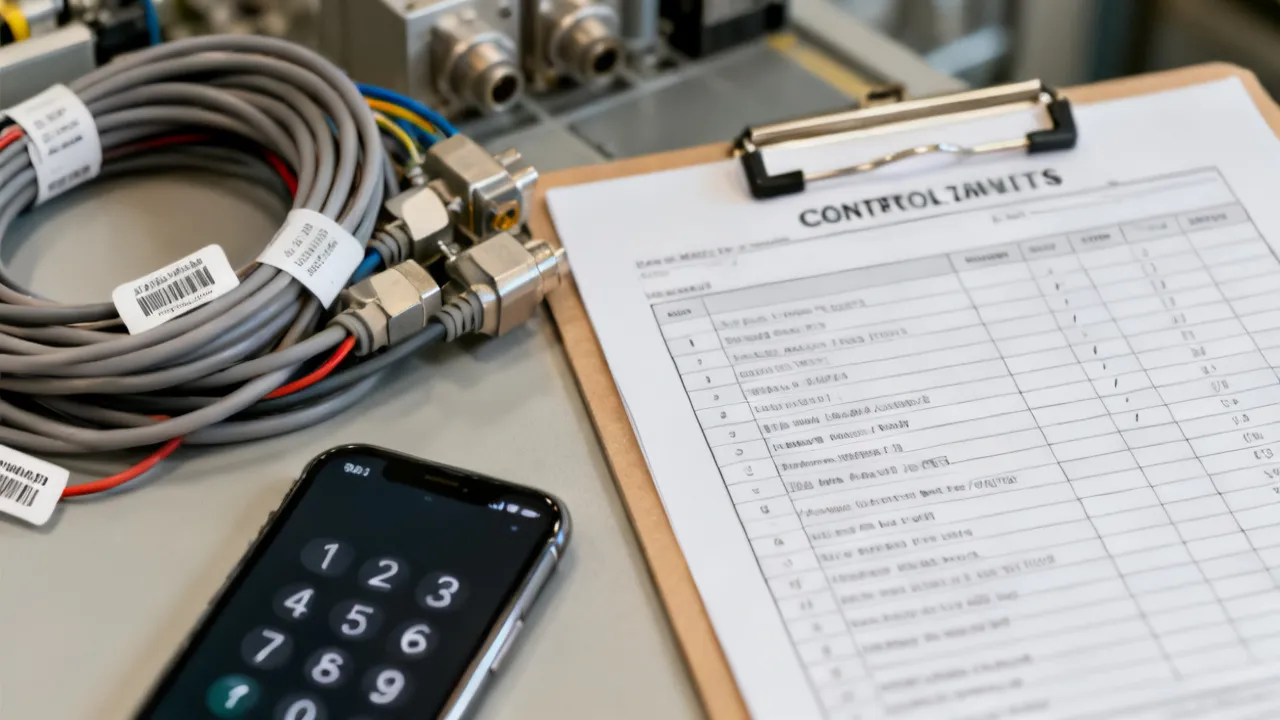
This guide explains how to evaluate supplier options and pricing decisions connected to 9691133599. Objectively, it discusses how manufacturers, distributors, and procurement teams typically validate part availability, lead times, compliance, and cost drivers. You’ll also find a comparison-oriented checklist of requirements and practical steps to reduce risk while aligning purchasing with operational needs.
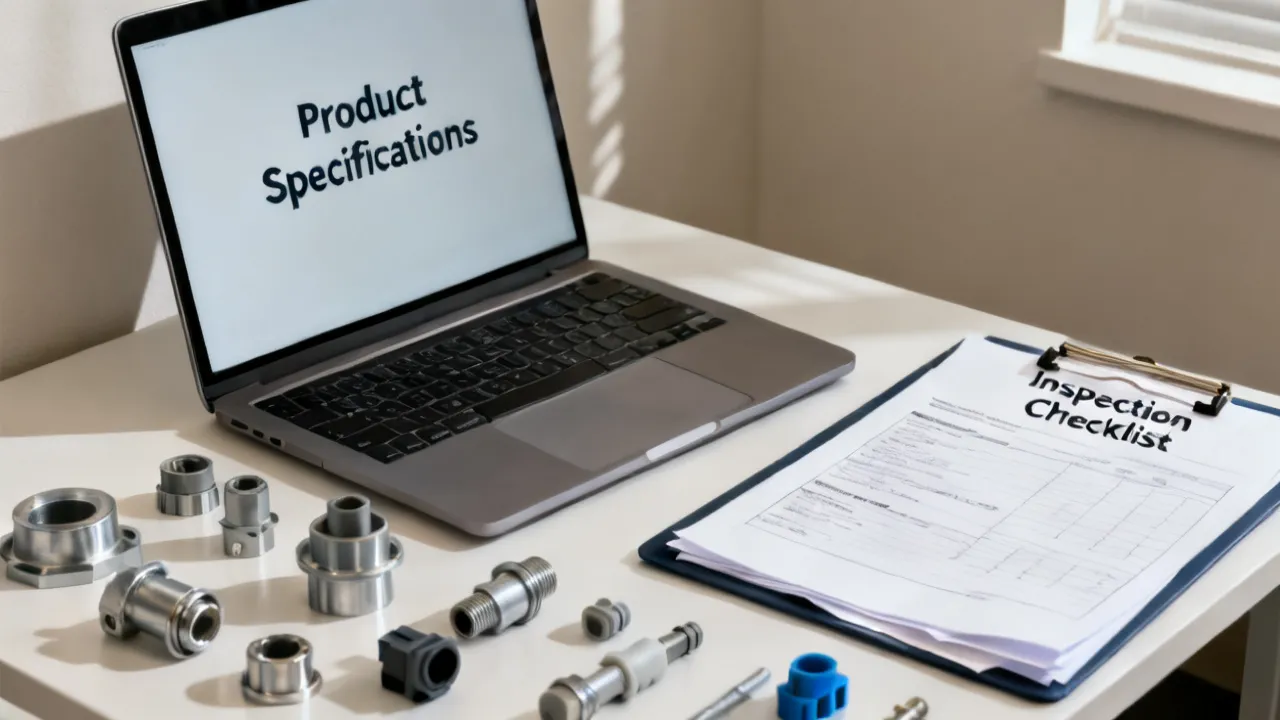
This guide explains how buyers evaluate suppliers and verify product quality around 93053878704, using objective procurement criteria and document-based checks. It also provides background context on common due-diligence steps, typical risk points in sourcing, and practical requirements buyers should expect. The approach is designed to support compliant, traceable purchasing decisions.
This guide explains how to source industrial or service supplies efficiently using the contact number 9691133599, with practical supplier-selection logic and objective procurement considerations. It provides background on why supplier verification, lead-time expectations, and documentation matter, and it outlines decision criteria, risks, and FAQs for buyers who want dependable sourcing outcomes.

