This guide explains how to evaluate Elidia before purchase, focusing on quality signals, supplier reliability, and practical requirements. Objectively, “Elidia” is treated as a product or brand term used by buyers to describe a specific offering, while due diligence helps reduce mismatch between expectations and delivered specifications.

When you’re considering Elidia, the most consequential step is straightforward: confirm the product’s specifications, documentation, and supplier credibility before you decide. In practical terms, buyers often discover too late that “the same name” can mask differences in materials, manufacturing batches, warranty coverage, or intended use. This guide helps you evaluate Elidia with an objective, industry-informed lens—so the final decision aligns with real-world performance, not assumptions.
Because your request does not provide explicit numeric price or named supplier details, this article does not invent figures or unverifiable supplier claims. Instead, it provides a rigorous framework you can apply to any listed Elidia offer you encounter—whether the listing appears premium, mid-range, or budget-oriented. You can still use the steps below to judge whether a quote is consistent with the product’s stated build quality, certifications, and after-sales support.
Importantly, the goal here isn’t to “overthink” every purchase; it’s to separate quality signals (verifiable indicators that a product is what it claims to be) from marketing signals (phrases that may sound persuasive but don’t necessarily change how the product behaves in your environment). If you build your purchase around quality signals first, you dramatically reduce the chance that your later experience is defined by unclear specs, missing documentation, or non-transparent warranty outcomes.
In commerce, terms like Elidia often function as a brand name, collection name, or product-line identifier. From an industry perspective, the buyer risk is not the name itself; the risk is the gap between:
Therefore, treat Elidia as a label that must be validated through verifiable product documentation—such as technical sheets, material composition disclosures (where relevant), handling instructions, compliance notes, and warranty terms.
To make this concrete, consider how product naming often works in real markets:
All of these cases point to the same buying rule: never assume the “Elidia” title uniquely identifies the exact configuration you need. You must validate via specifications, references, and warranty documentation that match the exact variant you plan to purchase.
Price by itself can mislead. Two Elidia offers might appear similar in headline cost but differ in critical inputs (for example, component grades, production standards, packaging level, or service coverage). To evaluate Elidia offers responsibly, compare not only the final total but also the bundle contents and risk coverage.
Practical approach: for any quote you see, ask whether the price includes:
If a seller can’t provide these elements, the “lower price” can function as a hidden cost through higher uncertainty. Even if the product works initially, the inability to confirm specifications can lead to:
Another way to think about this is the “cost of confidence.” When a listing includes strong documentation and a clear warranty pathway, you pay not just for the item but for reduced uncertainty. When those safeguards are missing, you can end up paying twice—once at purchase, and again through replacement, returns friction, or lost time.
When you compare offers, avoid a simple “cheapest wins” approach. Instead:
Over time, buyers who follow this spec-to-cost logic often develop a “feel” for which listings are engineered to be verifiable and which listings rely mainly on broad promises. That intuition becomes more reliable when it’s anchored to documentation rather than to presentation alone.
For Elidia, supplier evaluation should focus on how consistently the seller can substantiate the product. A reliable supplier typically demonstrates:
In many industries, procurement teams treat supplier reliability as a key risk-control factor because it affects warranty outcomes and post-purchase resolution rates. Even when the product quality is strong, a weak supplier can create delays, partial replacements, or unclear coverage interpretations.
To expand this into a more operational checklist, think about supplier reliability as having three dimensions:
1) Communication reliability
2) Policy reliability
3) Fulfillment reliability
These reliability factors become especially important for Elidia if your purchase is time-sensitive (installation windows, seasonal use, maintenance schedules) or if the product has compatibility dependencies (power requirements, mounting standards, or environmental constraints).
One more nuance: supplier reliability is not only about “big brand” vs. “small seller.” A small seller can be reliable if they provide documentation, honor policies consistently, and handle claims transparently. Conversely, a large seller can be unreliable if the listing documentation doesn’t match the shipped product or if warranty processes are buried and difficult to follow. Your verification steps should neutralize both possibilities.
A common reason buyers regret an Elidia purchase is mismatch between the product’s intended design and the buyer’s needs. To avoid that, you should translate your scenario into requirements and then check whether the product description (and documentation) confirms them.
Ask for confirmation of the following categories—depending on what Elidia actually is in your context:
When documentation is vague, the safest method is to request written clarification. If the seller cannot provide it, treat the ambiguity as a decision risk.
To deepen the concept of “product fit,” it helps to classify your needs into two buckets:
Must-haves (non-negotiable)
Preferences (improve experience but not required)
This distinction helps you avoid “almost works” outcomes. If a seller claims compatibility but cannot back it up with documentation, you should treat that claim as a preference at best until confirmed as must-have compatible.
Also, note that product fit can change after purchase if you modify your setup. For instance:
By considering fit across the entire lifecycle—purchase, shipping, installation, usage, and potential service—you reduce the probability of warranty disputes and operational failures.
Before you commit to Elidia, you should request a short set of documentation and confirmations. This step is especially important if the listing includes multiple variants, customizations, or “bundle” components.
To make the checklist more actionable, you can also request:
Another due diligence tactic is to ask a “boundary question.” For example, ask: “What would cause the warranty to be denied?” or “Under what conditions would this be considered defective?” When a seller can answer clearly and confidently, it often correlates with a well-managed warranty program. If they avoid the question or respond with non-specific statements, that may indicate risk.
Finally, keep your own record. Even if the seller is honest and transparent, documentation can become harder to obtain later. Saving the listing snapshot, invoice, messages, and any files provided ensures you have a clear record if you need to pursue a warranty claim.
The table below acts as a practical supplement to the main discussion. Use it to compare purchasing scenarios and to set decision conditions. (No external links are included.)
| Evaluation Area | What to verify for Elidia | If the answer is “unclear” | Recommended condition before purchase |
|---|---|---|---|
| Specifications | Exact dimensions, materials, versions, or technical requirements | Listing may be generic or mismatched to your use case | Written spec sheet or equivalent authoritative document |
| Price consistency | Total cost plus what’s included (packaging, documentation, service) | Hidden costs appear after checkout | Itemized quote and clear total breakdown |
| Supplier track record | Responsiveness, policy clarity, and fulfillment standards | Support gaps can complicate warranty claims | Confirmed warranty handling procedure |
| Warranty coverage | Duration, exclusions, claim method, and required documentation | Warranty may not cover the failure mode you fear | Warranty terms in writing before payment |
| Returns and condition | Return window, condition requirements, and inspection process | Returns may be denied for minor packaging issues | Return terms aligned with your acceptance criteria |
| Compatibility | Confirmation of use-case suitability | You might need accessories or later changes | Seller confirmation and documented compatibility statement |
Once you have verified these areas, you can treat the purchase as substantially “de-risked.” But if any critical verification remains unclear, you should consider either requesting further clarification or selecting a different listing where documentation is complete. In many buyer experiences, the cost of asking one or two more questions is dramatically lower than the cost of dealing with a warranty claim for an item that was never confirmed to be the right variant.
Below is a structured procedure designed to reduce buyer risk and increase decision quality. Adjust the specifics to your product category and intended use.
To extend the step-by-step guide into something you can actually use in a real purchase workflow, consider the following practical sequencing:
This sequencing matters because it turns buying into a controlled process. When buyers skip early documentation checks, they tend to discover mismatch issues after delivery—when resolution is harder and policies can be stricter.
From an industry standpoint, consumer purchasing failures frequently originate from mismatched assumptions rather than clearly defective products. This is especially true in modern marketplaces where listings can compress complex specifications into short marketing summaries. A spec sheet, warranty terms, and compatibility confirmations function as “risk controls.” They also help you shift from subjective evaluation (“it looks good”) to verifiable evaluation (“it is built for my requirements”).
Where you can, align your decision process with established procurement logic: document verification, supplier assessment, and policy review. These practices are widely used across B2B buying because they reduce ambiguity and improve resolution outcomes when something goes wrong.
There are several reasons this style of evaluation is considered best practice:
Even though this guide is written for consumer-style buying, the logic is borrowed from B2B purchasing where repeatability and auditability are valued. In B2B terms, you’re essentially treating “Elidia” as a product needing specification validation and contract-like policy clarity.
Additionally, verifying quality signals before purchase helps you avoid the common trap of “optimism bias.” Buyers can be influenced by photographs, adjectives, star ratings, or seller reputation. Those signals can be useful, but they are not substitutes for the technical and policy signals that determine whether your expectations will be met and whether you can resolve problems.
Finally, when you build your process around documentation and supplier reliability, you are less dependent on luck. Purchases become a matter of verification rather than a matter of hoping the listing matches reality.
To keep the article grounded, the following are widely used categories of references you can consult when validating general purchasing and warranty practices. Since this article does not claim specific numerical performance data for Elidia itself, it relies on broadly recognized standards and consumer protection norms:
Because you may want to align your checklist with local consumer rights, consider the type of rules that usually matter most in disputes:
If you share your purchase region and the product category, you can adapt your verification checklist to include the most relevant local documentation expectations. In many cases, the most effective approach is still the same: request documentation and keep evidence.
“Elidia” is used as a brand or product-line label in commerce. Because listings can vary by variant, the safest way to treat Elidia is as a named offering whose exact specifications must be confirmed through documentation.
When clarifying what Elidia is, pay attention to how sellers describe it:
These details determine what “Elidia” means in practice for your purchase.
Compare total cost with the included components and protections: documentation provided, warranty scope, return policy clarity, shipping terms, and any compatibility assurances. A lower price can be less favorable if it reduces coverage or increases uncertainty.
To improve objectivity, you can score offers against a checklist. For example:
Even a simple Yes/No scoring helps prevent you from being misled by promotional language.
Request specification documentation, warranty terms in writing, itemized bundle contents (if applicable), and a clear return process. Also ask how warranty claims are handled and what proof is required.
Additional helpful requests can include:
The main risk isn’t always the product quality—it’s the resolution process if something goes wrong. Unknown suppliers may have less reliable fulfillment, slower support, or less transparent warranty handling. That is why supplier credibility checks are important.
However, the risk can vary. A supplier can be “unknown” but still reliable if:
So focus on evidence and policies, not just brand recognition.
Typically, you should expect at minimum an invoice/receipt, product description aligned with the listing, warranty terms, and any technical sheet relevant to the product category. The exact set depends on what Elidia is.
For your own organization, store these items in a single folder (digital and/or physical). This makes it easier to reference information during a claim, and it reduces the chance of missing required paperwork.
Translate your use case into requirements and compare them to the documented capabilities or required conditions of Elidia. Ask the supplier for confirmation and request written compatibility statements when possible.
Compatibility confirmation should be specific. Vague confirmation like “works with most systems” is often not enough if the consequences of mismatch are high. Instead, ask:
If critical details are missing—such as variant information, specification boundaries, or warranty scope—then the ambiguity becomes a buying risk. In most cases, it’s better to request clarifications or consider an alternative listing that provides verifiable documentation.
A useful rule is: if you can’t verify it, you can’t responsibly budget for it. If the only evidence you have is marketing language, you may be purchasing a guess rather than a product.
Save your invoice, screenshots of the listing details, supplier messages, and any proof of installation/usage if required. Ensure you follow the care/handling instructions provided with the product to avoid warranty exclusions due to improper use.
Additionally, keep a timeline. If a failure occurs, note the date, conditions of use, and any changes you made before the issue. If you can, document troubleshooting steps you performed according to instructions. This often helps clarify whether the issue is a manufacturing defect vs. a misuse scenario.
Your prompt includes no explicit city or country, and no location keyword was provided that requires substitution with “nearby.” If you tell me your purchase region (for example, the country you’ll receive Elidia in), I can adapt the warranty/returns considerations to match common consumer protection practices there.
Localization can matter because warranty length, return rights, and dispute procedures can vary. Even if the underlying “spec verification” logic is universal, the practical steps (what documentation is accepted, how long you have to return, and how remedies must be handled) can differ by jurisdiction. Knowing your region lets you tailor the checklist from general best practice to region-specific expectations.
Buying Elidia should be treated as a structured evaluation rather than a purely price-driven choice. By verifying specifications, confirming warranty and return mechanics, and assessing supplier credibility, you create a decision process that is repeatable and objective. Use the step-by-step guide and the comparison table as your framework, and you’ll be far more likely to end up with a product that matches both your expectations and your real-world requirements.
When you anchor the purchase in verifiable quality signals, you’re effectively converting uncertainty into evidence. That evidence is what protects you when something goes wrong—because disputes are resolved based on documentation and policy clarity, not on what was implied by a listing title or a sales pitch.
Ultimately, the best Elidia buying decision is the one you can justify with documentation: a spec sheet that matches the variant, a warranty that covers the most likely failure modes, a return policy that aligns with your comfort level, and a supplier whose communication and policies are consistent. If you can confirm those elements before paying, you’ve done the most important work—before the purchase becomes final.



This guide explains how to evaluate Elidia before purchase, focusing on quality signals, supplier reliability, and practical requirements. Objectively, “Elidia” is treated as a product or brand term used by buyers to describe a specific offering, while due diligence helps reduce mismatch between expectations and delivered specifications.

Williamsena is top understood through careful, evidence-led sourcing and practical evaluation. This guide outlines what Williamsena is, how to assess suppliers, typical handling and quality checks, and how to compare options responsibly. It also offers objective background context on related botanical terminology and the due-diligence steps used in professional procurement.

This guide explains how Elidia products are evaluated, sourced, and priced with an objective, industry-focused lens. It provides background on the keyword “Elidia,” outlines how suppliers typically structure offerings, and shows how buyers can compare options responsibly. You’ll also find practical requirements, a comparison framework, and FAQs designed to support careful decision-making.

This guide explains how to evaluate sourcing and pricing options connected to 9691133599, focusing on supplier reliability, lead times, and documentation. Background context covers what customers typically need when searching for product availability and procurement support, including verification practices and practical decision criteria used across procurement and logistics.
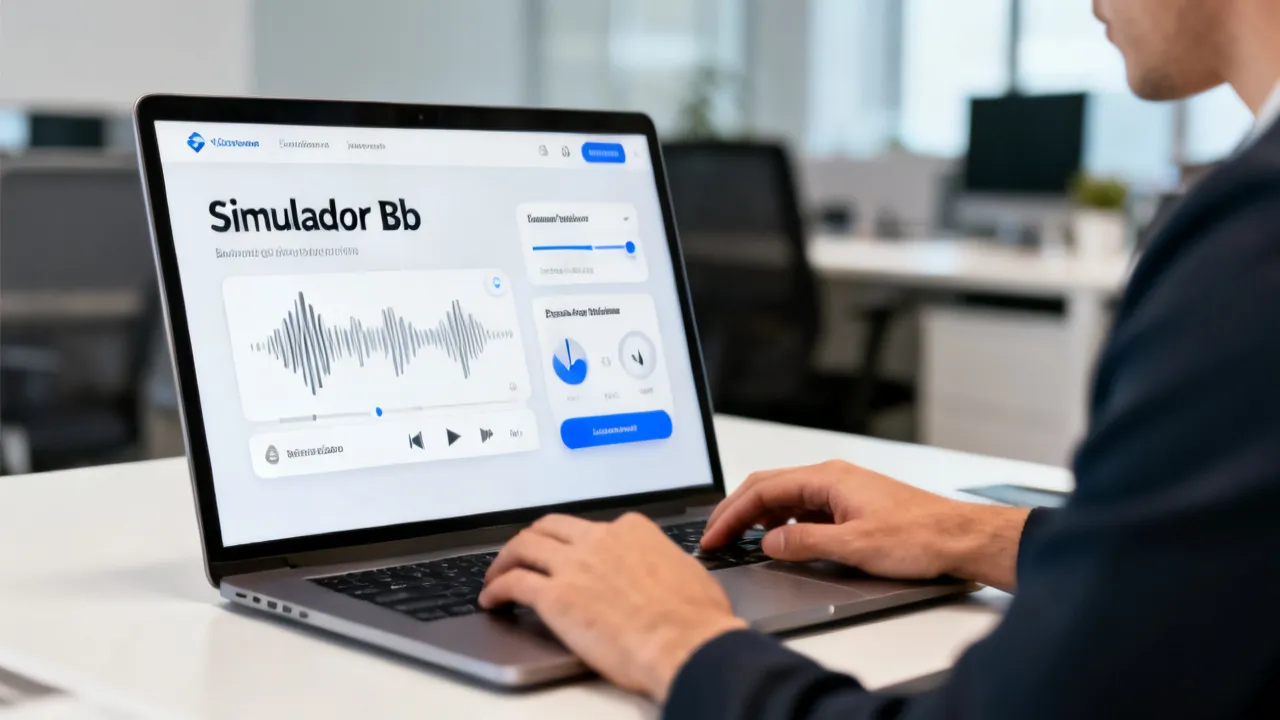
Esta guía explica cómo usar un Simulador Bb para planificar y comparar escenarios antes de tomar decisiones. Se revisa el contexto de uso, las principales variables que suelen intervenir y cómo evaluar resultados desde una perspectiva profesional. Además, se describen condiciones habituales de acceso y criterios de calidad para elegir una opción compatible con tus necesidades.

This guide explains “Fraciscoklbsonpereirs” and how to interpret it in practical, quality-focused research workflows. Objectively, the keyword functions like an identifier that may relate to records, naming patterns, or catalog entries. The article outlines evaluation methods, supplier considerations, and quality conditions for responsible use.

