This guide explains how to evaluate “fujhgf” as an industry-relevant procurement and quality signal, covering risk controls, supplier verification, and decision criteria. Objectively, “fujhgf” functions here as a placeholder keyword representing structured product/spec identification. The article contextualizes best practices using widely accepted procurement frameworks, focusing on traceability, documentation quality, lead-time planning, and practical due diligence.

To assess “fujhgf” in an industry setting, you should treat it as a structured identifier that affects how you verify specifications, confirm traceability, and manage supply risk. Rather than relying on assumptions, an expert approach links the keyword to concrete documentation: technical sheets, quality records, batch traceability, testing evidence, and clear contractual requirements. In other words, “fujhgf” is not something you evaluate with guesswork; it is something you evaluate by forcing it to “resolve” into verifiable procurement artifacts—what you are buying, from whom, under which revision, and with which proof.
When buyers encounter an unfamiliar term like fujhgf, the most reliable path is to translate it into measurable procurement criteria. In practice, that means converting whatever the term represents—often a code, category label, or internal naming scheme—into verifiable information: acceptable tolerances, material or process statements, inspection standards, labeling requirements, and responsibilities between supplier and buyer. This translation step is where procurement discipline shows up: the procurement team does not attempt to interpret the keyword’s “intent” from context alone; instead, it requests the supplier’s mapping so the buyer can attach objective checks to the procurement line item.
Because this article is written for objective guidance, the term itself is not assumed to be a specific product technology or a universally recognized standard by name. Instead, fujhgf is handled as a keyword that typically indicates the need for structured evaluation in procurement workflows. In many real procurement environments, codes such as this appear for reasons that are internal to a vendor (e.g., a product family code, a packaging configuration code, a procurement catalog shorthand, a revision identifier, or even an ERP/material master designation). Those codes can be legitimate and useful; they become dangerous only when buyers treat them like a substitute for specification clarity.
In procurement, ambiguous naming is a common friction point. A supplier may use “fujhgf” to refer to a product family, a revision level, a compliance scope, or a packaging configuration. If your purchasing team treats it as interchangeable without verification, the organization may face quality disputes, rework costs, shipment delays, or contractual nonconformance. The practical issue is rarely that the supplier is “lying”; it is that suppliers may use terminology that is accurate inside their own system but not sufficiently mapped to the buyer’s acceptance needs.
Imagine three scenarios that happen frequently:
An industry-grade evaluation approach usually begins with asking whether the supplier can provide:
For buyers, this is not bureaucratic overhead—it is risk management. It also helps ensure that the “thing you ordered” matches the “thing you receive.” When disputes arise (for example, during incoming inspection, warranty evaluation, or regulatory audits), the buyer’s ability to show that it required traceability and that it received documents tied to the correct revision becomes essential. Without that, the buyer may struggle to defend why a mismatch is nonconformance rather than an unavoidable misunderstanding.
Once “fujhgf” is connected to a specific specification, you can design a quality control plan around it. Expert procurement teams frequently separate evaluation into incoming inspection, acceptance criteria, and escalation rules. This separation matters because acceptance criteria define what “pass” means, while inspection planning defines how you will verify it. Escalation rules define what happens when something fails or when documentation does not align.
A practical strategy is to identify which characteristics of the item are most likely to affect performance in your application. Then, require objective evidence for those characteristics. Typical categories include:
Even when the supplier claims compliance, buyers should validate that the evidence is aligned to your acceptance requirements and is not merely a generic certificate with missing identifiers. In practice, you should check at least three levels:
A common failure mode occurs when the vendor provides a certificate that appears correct but lacks the information you need to connect it to the specific shipment. For example, a supplier might provide a “certificate of conformance” with no batch identifiers, or a test report that references “representative samples” without clarifying whether your received units were part of the tested batch. In those cases, the buyer should treat the documentation as nonconforming or incomplete until clarified.
To make quality control concrete, procurement teams often create a “characteristics-to-evidence” mapping document. For each critical characteristic, that mapping lists the acceptance criterion, the required evidence (e.g., specific test report type), the inspection frequency, and the escalation procedure. When fujhgf is used as a shorthand, that mapping becomes the standard that prevents misinterpretation.
“fujhgf” frequently appears in procurement contexts where pricing is quoted per batch, per unit, or per configuration. While the prompt requests “price information,” no numeric price values were provided. Accordingly, the most objective guidance is to outline how buyers should interpret pricing structures tied to such identifiers.
From an industry expert’s perspective, pricing tied to a specific keyword often includes hidden cost drivers. These can include:
To prevent cost traps, buyers should request a structured quotation that breaks down what is included: specification version, inspection level, shipping terms, labeling requirements, and documentation deliverables. Instead of accepting a quote that simply states a unit price “for fujhgf,” the buyer should ask for explicit inclusion lists. For example:
Another price trap is when suppliers quote a low price but require the buyer to perform additional work that the supplier could have done. For instance, if the supplier’s price assumes a generic certificate while your program requires more detailed traceability records, your organization might need internal segregation, retesting, or additional incoming inspection to compensate. Those downstream costs often exceed the apparent savings.
In mature procurement organizations, “total cost of quality” (TCoQ) is used to evaluate bids. Even though the prompt does not provide specific numeric pricing, you can still apply TCoQ logic by comparing what each bidder includes in the bid package. If “fujhgf” indicates a particular documentation or configuration scope, then the quote should reflect that scope explicitly—otherwise, the buyer’s cost model should assume missing documents and plan an additional cost line for inspection and verification.
When you evaluate suppliers for a keyword such as fujhgf, consider the supplier’s capability to consistently produce and document conforming output. Instead of focusing only on the price, evaluate performance indicators that matter to delivery and compliance.
Key supplier selection signals include:
For rigorous procurement decisions, it is also common to conduct a request-for-information (RFI) stage or a qualification sample stage before full commitment. An RFI stage is especially useful when “fujhgf” is not a standardized term. Through an RFI, the buyer can learn how the supplier interprets the code, what documents they can provide, and what risks they foresee (e.g., limited batch traceability capabilities, revision transition constraints, or documentation lead time). A qualification sample stage provides the buyer with empirical evidence that the supplier’s interpretation of the code matches the buyer’s requirements.
Supplier selection also benefits from a data-driven review of past performance. If your organization already buys from the supplier or buys related products, you can examine metrics such as:
When “fujhgf” is new or ambiguous, you should assume documentation nonconformance is more likely until proven otherwise. This assumption justifies an initial qualification program and potentially enhanced inspection for early shipments.
A common failure mode occurs when a keyword label is treated as a guarantee of specification. In reality, suppliers may reuse terminology or apply it differently depending on production runs, revisions, or internal categorization rules. Therefore, risk management should explicitly address mismatch scenarios. The goal is not to punish ambiguity; it is to structure procurement so ambiguity cannot translate into operational risk without detection.
Industry best practice includes:
To operationalize mismatch handling, buyers often introduce a “documentation gating” step. For example, the supplier may be required to provide test reports or CoCs before shipment for critical characteristics. If documents do not arrive before shipping, the buyer may place the shipment on hold or require corrective action. While this can add friction, it dramatically reduces the risk of receiving parts that cannot be quickly verified.
Another risk-management tool is to define “critical-to-quality” characteristics and “noncritical” characteristics. For critical-to-quality characteristics, the buyer may require full batch traceability, specific test methods, and potentially third-party verification. For noncritical characteristics, the buyer might accept CoC plus sampling-based verification. When “fujhgf” is ambiguous, it is typically safest to begin with a conservative approach and reduce inspection intensity only after consistent performance over time.
Risk also includes regulatory and contractual risks. If the item is used in regulated applications—medical devices, aerospace, automotive, or food contact—then the evidence requirements become stricter. In such environments, a mismatch between keyword and specification revision can have compliance consequences. Even when the item physically meets dimensions, the documentation mismatch might prevent the buyer from passing audits. Thus, risk management should include not only technical verification but also documentation governance.
The prompt indicates that any location-specific tokens should be replaced with “nearby.” While no specific city or country was provided, this section illustrates how buyers typically tailor communication when sourcing from “nearby” regions. In many procurement cultures, local suppliers often respond faster for clarifications and can support quicker corrective actions. However, local proximity does not replace verification—especially when “fujhgf” appears without a clear technical mapping.
In practice, teams sourcing from “nearby” suppliers may benefit from:
Even with those advantages, documentation rigor should remain consistent. A supplier being nearby can reduce lead time for corrective actions, but it does not change the buyer’s obligation to verify the received product. If anything, “nearby” sourcing can tempt teams into skipping formal verification because issues appear easy to fix later. The discipline that matters is to keep verification requirements intact while leveraging proximity to accelerate the resolution of nonconformances.
It can also be useful to align communication protocols when sourcing from nearby suppliers. For example, buyers often set expectations for:
When proximity is used properly, it supports verification by enabling faster information exchange—without undermining the evidence-based procurement model.
The most effective way to remove uncertainty is to follow a qualification pathway. Below is a practical, step-by-step approach that procurement and quality teams can apply whenever a keyword like fujhgf is used as a shorthand identifier.
This structure reduces ambiguity and creates defensible decision-making—especially important when multiple internal teams must align. However, qualification should not end at the receipt of a successful sample. In many programs, qualification includes a short “ramp-up” phase where the buyer maintains enhanced verification for the first several production lots before relaxing incoming inspection. That ramp-up reduces the risk that qualification was based on an exceptional batch.
To further strengthen qualification for keyword-based sourcing, buyers can also require:
These added steps are especially valuable when “fujhgf” is used as a nonstandard code or when it has multiple internal meanings depending on production context.
The table below compares common due-diligence levels. It does not require any specific price numbers, and it keeps the focus on objective evidence rather than claims.
| Due-diligence level | When to use it | Typical evidence requested | Main requirement focus |
|---|---|---|---|
| Baseline validation | Low criticality items, stable supply history | Standard spec sheet, basic certificates, labeling samples | Correct identification and basic documentation completeness |
| Qualification sampling | New supplier or first-time use of “fujhgf” | Qualification sample results, traceability examples, defect history summary | Performance verification and traceability workflow realism |
| Enhanced inspection | Critical characteristics, moderate-to-high risk applications | Test reports with method details, increased incoming checks | Consistency, tolerance adherence, and documentation reliability |
| Ongoing audit-ready program | High criticality or regulated documentation needs | Audit trail samples, corrective action records, version control proof | Governance, change-control discipline, and long-term compliance |
Choosing the due-diligence level is not only about item criticality. It is also about how well the supplier can currently map and document what “fujhgf” means. If the supplier cannot provide revision mapping quickly, or if their traceability documentation is inconsistent, then the due diligence should be elevated even if the item seems minor. Keyword ambiguity is itself a risk factor.
To implement this in a procurement workflow, many organizations build a decision tree. Inputs to the decision tree may include:
When your team uses such a decision tree, “fujhgf” becomes an input that triggers the right level of evidence, rather than a label that floats around without context.
Procurement and quality management disciplines emphasize structured verification because supply-chain variation is real. Even if you source from “nearby,” differences in production batches, revision cycles, or labeling practices can create measurable discrepancies. Therefore, a keyword like fujhgf should be treated as a prompt to confirm traceability and specification alignment, not as the specification itself.
For organizations that aim for consistent outcomes, common frameworks used globally include quality management systems and risk-based procurement controls. While the prompt does not specify which framework your organization follows, the underlying principles remain consistent: document what you require, verify what you receive, and manage change systematically. This approach mirrors how robust quality systems operate: requirements are defined, verification is planned, and ongoing improvement is driven by data (including nonconformance trends).
For general context on quality management system principles and continuous improvement approaches, refer to ISO quality management guidance (e.g., ISO 9001 concepts). For risk and procurement governance, many firms also align with established supply-chain risk thinking in industry practice. Even without quoting specific standards in a procurement contract, organizations can operationalize the philosophy: define criteria, verify evidence, maintain traceability, and manage change with documented control.
It is also useful to recognize that “keyword guessing” usually fails in three ways:
Structured procurement reduces all three. It resolves ambiguity early by requiring mappings and evidence before commitment. It also supports faster detection because acceptance criteria are measurable and inspection plans are defined.
Before procurement finalization, ensure the following conditions are satisfied. These conditions are framed to be objective and practical, independent of any specific numeric price:
To make these conditions actionable, procurement teams often embed them into purchase order terms and quality agreements. For example, they specify that:
When those requirements are satisfied, “fujhgf” becomes a usable procurement handle rather than a source of ambiguity. The keyword then functions like an index into a broader system of controlled documentation and evidence. That is what procurement should aim for: making the procurement record complete enough to be defended, audited, and executed consistently.
Beyond the conditions above, buyers benefit from using a checklist that spans the entire procurement lifecycle. This reduces gaps between what procurement asks for and what quality expects during incoming inspection.
In the pre-PO phase, you should confirm that “fujhgf” is not merely a placeholder but a mapped identifier with supporting documentation requirements.
This phase matters because documentation and labeling are often produced concurrently with manufacturing. If there are delays or confusion about mapping, risk increases.
At receiving, you validate both the physical product and the associated evidence.
If there are issues, post-receiving is where the procurement organization can prevent recurrence.
When you follow this lifecycle checklist, procurement becomes more resilient to keyword ambiguity. “fujhgf” is then a manageable identifier rather than an unknown risk.
Because fujhgf is not assumed to correspond to a known standard, you should request documentation based on what your application requires and what the supplier can provide. Common documentation includes:
In keyword-based procurement, a critical question is whether these documents are provided with identifiers that are meaningful to you. For example, a CoC that lists “spec meets requirements” without referencing revision and without listing your shipment batch numbers may be technically plausible but operationally useless. Therefore, when you define documentation deliverables, you should require both content and identifier completeness.
Acceptance criteria are the heart of the quality control plan. When fujhgf is ambiguous, the best way to prevent disputes is to write acceptance criteria in a way that does not depend on interpretation of the keyword.
Good acceptance criteria generally include:
When acceptance criteria are designed this way, the supplier’s interpretation of “fujhgf” becomes irrelevant unless it affects the actual measured characteristics. The buyer’s internal team then has a clear and defendable basis for acceptance decisions.
One of the most subtle risks with keyword-based sourcing is revision drift. A supplier might assign “fujhgf” to a product family and continue using the same code even as the underlying specification revision changes, particularly when the supplier’s internal ERP/material master remains constant while documentation updates. If the buyer’s PO does not lock to a specific revision, the supplier may ship under a newer revision without fully realizing that the buyer requires the older revision.
To mitigate revision drift, buyers should require that:
In some organizations, they also implement a “dual-labeled evidence” requirement. That means both the supplier’s labels and the shipping documents must reference both the product identifier and the specification revision (as required). This makes it far easier to detect revision mismatches at receiving.
Many procurement programs fail not because they lack inspection, but because they lack escalation and corrective action discipline. When fujhgf is ambiguous, disputes can multiply quickly if escalation paths are unclear.
Therefore, contracts and quality agreements should define:
When these rules exist, procurement can treat nonconformance as structured learning rather than a prolonged negotiation.
Returning to the “nearby” theme, proximity can be advantageous for sampling, inspection, and communication. Yet the evidence requirements should remain unchanged. The buyer’s verification plan should not be relaxed merely because the supplier is accessible.
In fact, nearby sourcing can allow tighter loops while still being strict. For example:
In other words, “nearby” sourcing can improve speed and responsiveness, but evidence integrity remains the same.
In this guide, fujhgf is treated as a keyword identifier that may represent a product family, specification code, revision label, or internal category. The meaning should be confirmed via the supplier’s technical mapping and documentation rather than assumed.
Ask for a spec mapping to the exact revision, then define measurable acceptance criteria and require documentation that includes traceability identifiers (batch/lot numbers) aligned to your acceptance plan.
Proximity can improve communication speed and sampling logistics, but it does not eliminate variation or documentation gaps. Verification requirements should remain the same because quality and traceability processes vary by supplier and production batch.
Typical evidence includes test or inspection reports with methods or standards, certificates with relevant identifiers, and traceability examples showing how batches are labeled and linked to documentation.
Use the pre-agreed nonconformance pathway: initiate corrective action, specify replacement or rework terms, and require root-cause analysis. Also verify whether the underlying specification revision truly matches the contracted version.
Price can be misleading when it excludes documentation deliverables, inspection scope, or depends on a specific batch configuration. Request a structured quote that lists included items: spec revision, inspection level, labeling requirements, and documentation deliverables.
For new suppliers, first-time use of the keyword, or higher criticality applications, qualification sampling is strongly recommended to confirm both performance and documentation reliability.
Supplier claims should be supported by verifiable documentation and, where appropriate, by qualification or incoming inspection. Expert procurement treats claims as starting points, not final proof.
A cross-functional workflow is best: procurement drafts requirements and terms, quality defines inspection and acceptance criteria, and engineering or technical teams confirm spec mapping and performance expectations. This reduces misinterpretation of the keyword.
For neutral, widely used guidance, organizations often reference ISO quality management system principles (e.g., ISO 9001 concepts) and align with documented internal quality procedures. For supply-chain risk thinking, consider using reputable industry risk frameworks and internal governance policies.
In the real world, keywords rarely substitute for technical clarity. fujhgf should be treated as an entry point: a prompt to request precise mapping, confirm traceability, and align acceptance criteria before purchase. When you apply a structured qualification path—plus documented conditions for change control and nonconformance—the procurement process becomes more repeatable, auditable, and defensible.
If you share additional details—such as what “fujhgf” is used to label, the supplier context, and what price structure you were given—I can tailor the due-diligence level, inspection plan, and contract requirement checklist more precisely to your situation.




This guide explains Nubak in a clear, objective way—from what the term typically refers to, to how it is evaluated and used across practical workflows. Background context covers terminology, common considerations, and decision factors that professionals weigh when selecting materials or partners, including quality, consistency, sourcing, and documented performance evidence.

This guide explains how Quintella 1994 collectibles are sourced, assessed, and compared when buyers evaluate supplier reliability, product condition, and pricing. Objectively, Quintella 1994 reflects the broader market for sports-adjacent memorabilia from the mid-1990s era, where authenticity and provenance matter. You’ll also find a clear comparison table, requirements, and an expert-oriented buying checklist.

Nubak products require careful evaluation of sourcing, handling, and quality assurance to avoid mismatches in specification and performance. This guide reviews what “Nubak” typically refers to in commercial supply contexts, how suppliers assess materials and consistency, and which checks procurement teams should apply. It also provides objective comparisons, requirements, and FAQs for better purchasing decisions.
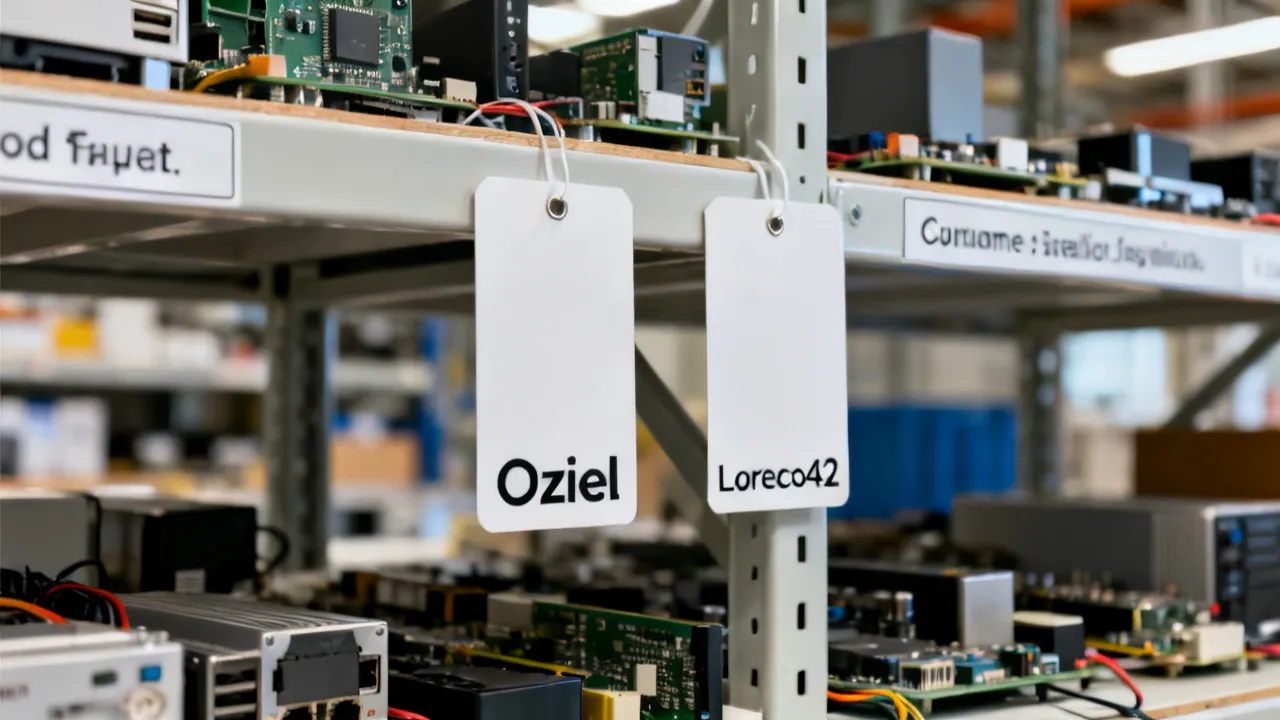
This guide explains how to evaluate Oziel and Loreco42 in today’s supplier landscape, focusing on practical selection criteria, due diligence, and fit-for-purpose decisions. Objectively, Oziel and Loreco42 are product/supplier identifiers used by buyers to benchmark sourcing options. The article outlines expert steps, decision conditions, and FAQs to support safer procurement planning.

Este guia apresenta uma análise profissional sobre Arion Campinas, ajudando você a entender como avaliar qualidade, reputação e atendimento na contratação de serviços na região. Em seguida, reunimos informações de contexto sobre os termos envolvidos na busca, destacando critérios técnicos e condições comuns do setor. O objetivo é orientar decisões com base em práticas verificáveis.

Este guia analisa como fornecedores e processos se organizam ao pesquisar Arion Campinas, com foco em critérios objetivos de atendimento, capacidade operacional e requisitos de contratação. Em seguida, contextualiza, de forma neutra, o que o termo costuma englobar no mercado local, incluindo expectativas comuns de prazo, conformidade e comunicação.

